
How to Choose the Right Full Stack Development Company in Singapore

October 28, 2026
AI ,Full stack development
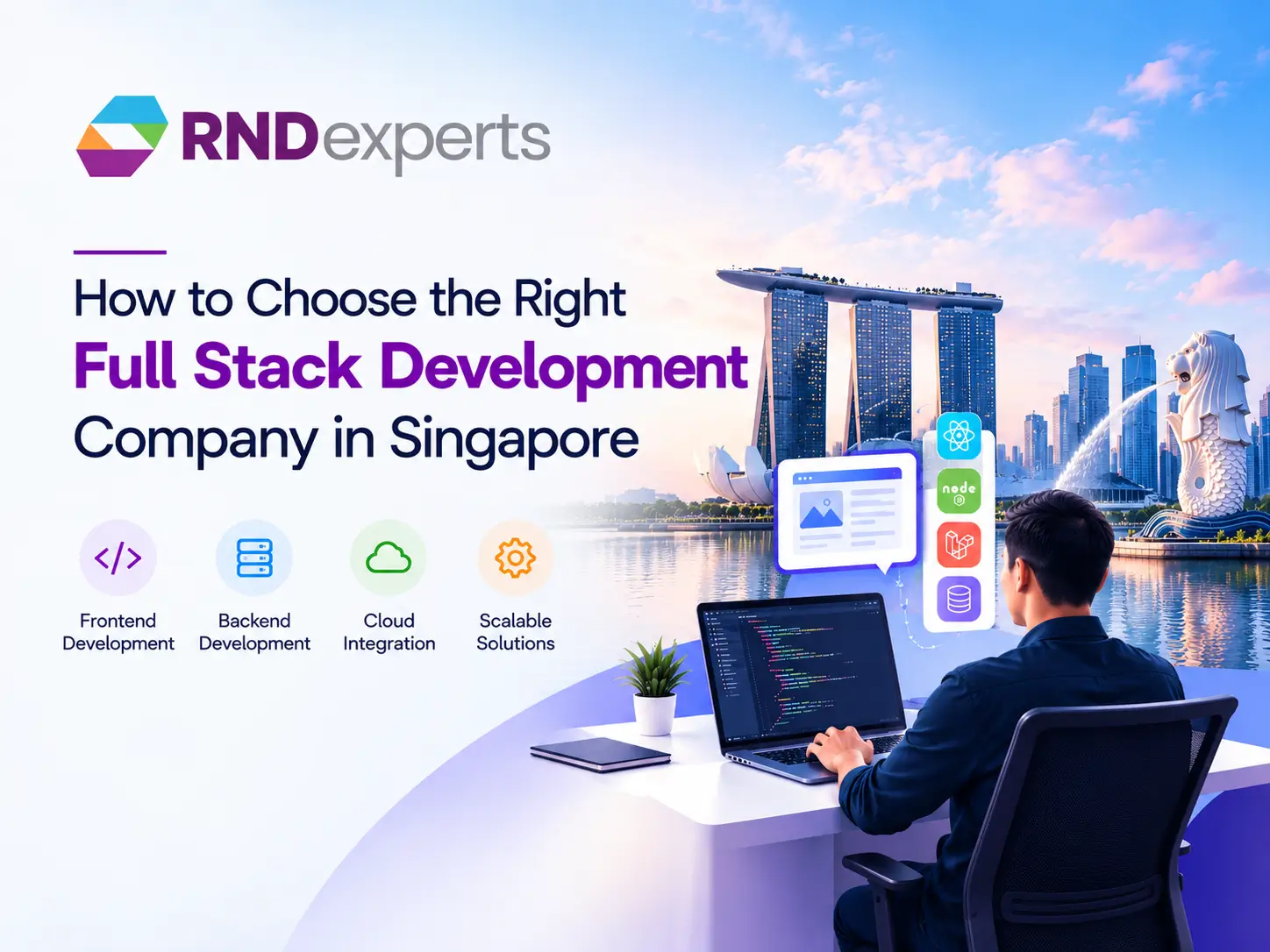
Choosing the right full stack development company in Singapore starts with understanding your business goals, technical requirements, budget, and long-term plans. The right development partner should be able to manage frontend and backend development, database integration, application security, testing, and ongoing maintenance while keeping your business objectives at the center of the project.
Whether you want to build a corporate website, a custom web application, an eCommerce platform, or a SaaS product, evaluating a development company’s technical expertise and project management process can help you make an informed decision.
For businesses in Singapore, working with a capable development partner can make it easier to turn an idea into a functional digital product. Here are the key factors to consider before making your choice.
What Does a Full Stack Development Company Do?
A full stack development company builds and maintains both the frontend and backend components of websites and web applications.
The frontend includes the interface users interact with, such as navigation, forms, dashboards, and product pages. The backend manages application logic, databases, authentication, APIs, and server-side operations.
A full stack development team coordinates these components to ensure they work together effectively. Depending on your requirements, its services may include:
- Custom website and web application development
- Frontend development using technologies such as React, Angular, HTML, CSS, and JavaScript
- Backend development using Node.js, PHP, Laravel, and other frameworks
- Database design and API integration
- eCommerce and SaaS application development
- Website maintenance, testing, and performance optimization
Understanding these services helps you determine whether a company can handle your complete project or whether you will need additional specialists.
1. Evaluate Technical Expertise and Relevant Experience
The first step is to assess the company’s technical capabilities. Not every development project requires the same technology stack, so the company should understand your requirements before recommending a solution.
For example, an interactive business application may require a JavaScript-based frontend, a suitable backend framework, and a database designed around the application’s data needs. An eCommerce platform may need payment gateway integration, inventory management, customer accounts, and order tracking.
Ask potential development partners about similar projects they have completed, the technologies they used, and the challenges they addressed. Review their portfolio to understand the complexity and functionality of their work.
Have A Project In Mind?
From Web Development To Shopify And AI Solutions, Let’s Discuss
How
We Can Help Your Business.
Consultation
Team
Solutions


A credible provider should explain its technical decisions in clear language and connect them to your business needs instead of recommending technologies simply because they are popular.
2. Check the Company’s Portfolio and Case Studies
A portfolio provides practical evidence of a development company’s capabilities. However, do not evaluate a portfolio based on visual design alone.
Look for projects that demonstrate relevant functionality, responsive layouts, smooth navigation, integration capabilities, and appropriate performance. If the company shares case studies, check whether they explain the original problem, the solution implemented, and the measurable results.
Useful questions include:
- Has the company developed applications similar to yours?
- Can it explain the challenges and solutions involved?
- Are its projects usable on mobile devices?
- Does it have experience integrating third-party tools and services?
- Can it provide relevant client references where permitted?
Avoid relying entirely on broad claims such as being the best or most experienced provider. Specific examples and verifiable evidence provide a stronger basis for comparison.
3. Understand Its Development Process
A reliable development partner should follow a clear process from initial planning through launch and maintenance.
A typical project may include requirements gathering, technical planning, UI/UX design, development, testing, deployment, and post-launch support. Each stage should have defined responsibilities and deliverables.
Before signing an agreement, ask how the company handles changes in requirements, project milestones, progress updates, and quality assurance. Find out who will communicate with you and how technical issues will be reported.
Regular demonstrations and milestone reviews can help you identify problems early. They also give your team an opportunity to provide feedback before major decisions become expensive to change.
4. Assess Security, Scalability, and Performance
An application should not only work at launch; it should also be capable of supporting future business requirements.
Ask how the development team handles authentication, access permissions, data validation, secure communication, database protection, backups, and software updates. Security measures should reflect the type of information your application collects and processes.
Scalability also deserves attention. If your customer base or transaction volume increases, the architecture should provide a practical path for handling additional demand.
Performance testing, efficient database queries, caching where appropriate, and monitoring can help identify potential bottlenecks. A responsible company should explain the trade-offs involved rather than promise unlimited scalability or perfect performance.
5. Look for Industry-Relevant Experience
Different industries have different technical requirements. An online retailer may need inventory synchronization and secure checkout, while a subscription-based software business may require recurring billing, user permissions, and account management.
If you are planning a SaaS product, consider a SaaS development company with experience in subscription workflows, multi-user access, integrations, and ongoing product improvements.
Similarly, businesses building online stores should look for relevant eCommerce expertise, while organizations developing internal business tools may prioritize workflow automation and system integration.
Industry experience is helpful, but it should not be the only selection criterion. The provider must also demonstrate an ability to understand your particular business model and adapt its approach accordingly.
6. Compare Pricing, Contracts, and Ownership Terms
Development costs depend on the project’s scope, complexity, technology requirements, integrations, and ongoing support needs. A low initial quote does not necessarily represent the best value.
Request a detailed proposal explaining the deliverables, timeline, payment milestones, assumptions, exclusions, and maintenance arrangements. Clarify how additional features or changes will be priced.
You should also establish ownership and access arrangements for source code, domain registrations, hosting accounts, design files, documentation, and other project assets. Make sure the contract clearly explains intellectual property rights and any third-party licensing restrictions.
Comparing proposals on the basis of scope and deliverables makes it easier to identify differences that headline prices may conceal.
7. Confirm Communication and Post-Launch Support
Good communication is essential when a project involves multiple technical components and business stakeholders. Ask how frequently the company provides updates, who manages the project, and how quickly it normally acknowledges support requests under its agreed service terms.
Post-launch support is equally important. Websites and applications may require security updates, bug fixes, compatibility improvements, monitoring, and new features as business needs evolve.
Before choosing a provider, confirm whether maintenance is included in the project price or offered under a separate agreement. A clearly defined support arrangement helps prevent misunderstandings after deployment.
8. Choose a Development Partner That Understands Your Business Goals
The right company should understand why you are building the application, who will use it, and what success means for your organization.
For one business, success may mean generating qualified leads. For another, it may involve automating manual tasks, improving customer retention, or launching a subscription-based product.
Discuss your priorities before development begins. Ask how proposed features support those priorities and which requirements should be addressed first. This approach helps keep the project focused on business value rather than adding features without a clear purpose.
Why Consider RND Experts Pvt. Ltd.?
RND Experts Pvt. Ltd. provides web development solutions for businesses seeking custom digital experiences and functional web applications. When evaluating the company for a project, businesses can review its service offerings, discuss their technical requirements, and assess whether its capabilities align with their goals.
Whether you are planning a business website, an eCommerce platform, or a SaaS application, begin with a clear project scope and discuss the technologies, milestones, deliverables, and support arrangements required.
Visit https://rndexperts.com/ to explore the company’s web development services or contact the team at sale@rndexperts.com to discuss your project requirements.
Frequently Asked Questions
How much does it cost to hire a full stack development company in Singapore?
The cost depends on the project’s scope, complexity, integrations, technology stack, and support requirements. Request an itemized proposal based on your specific requirements rather than relying on a generic estimate.
How long does full stack web development take?
The timeline varies according to the number of features, design requirements, integrations, testing needs, and project scope. A smaller website generally requires less work than a complex web application or SaaS platform.
Should I choose a local Singapore company or an overseas development partner?
Consider technical expertise, communication, time-zone compatibility, relevant experience, contractual clarity, and post-launch support. An overseas partner can also be suitable if it offers a transparent process and can collaborate effectively with your team.
How can I evaluate a development company’s credibility?
Review its portfolio, technical approach, relevant case studies, client references where available, project process, security practices, and contractual terms. Verify specific claims before making a decision.
Conclusion
Choosing the right full stack development company in Singapore requires more than comparing prices or reviewing website designs. Evaluate technical expertise, relevant project experience, security practices, scalability, communication, contractual terms, and ongoing support.
A development partner that understands your business objectives can help you build a digital product that meets current requirements and can evolve as your business grows. Take time to compare proposals, ask specific questions, and verify claims before committing to a long-term partnership.
Have A Project In Mind?
From Web Development To Shopify And AI Solutions, Let’s Discuss
How
We Can Help Your Business.
Consultation
Team
Solutions
Rate this article!
Let’s Build Something Great!
Submit your idea and get a free project roadmap from our experts
Join 1+ Subscribers
Get the weekly updates on the newest brand stories, business models and technology right in your inbox.